Is Vaping CBD Legal Best Guide for Global Buyers?

Time:2026-05-11 Author:Isabella
0%

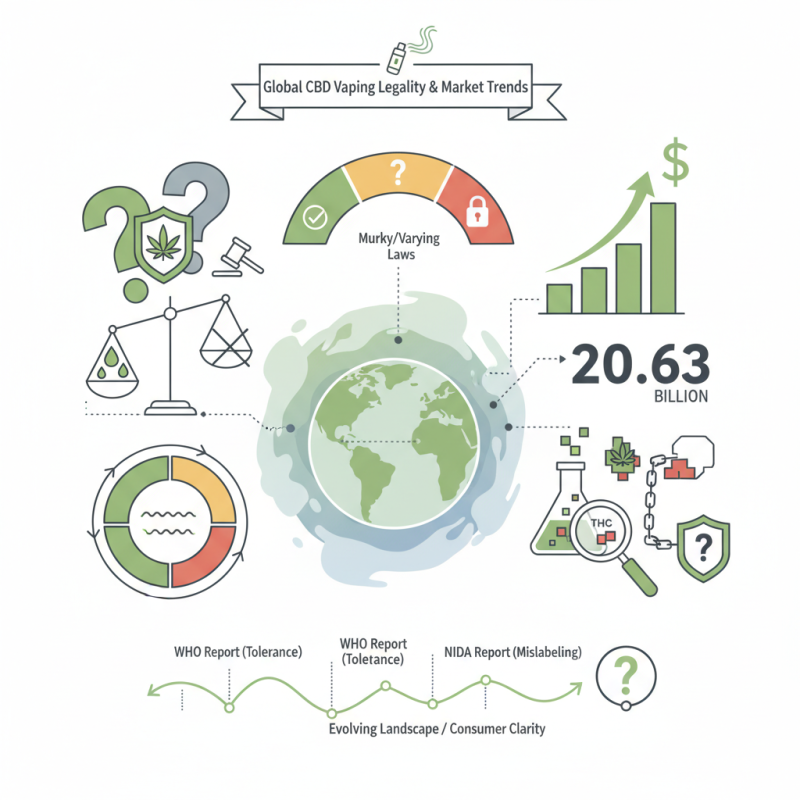
As the popularity of CBD vaping continues to rise, many consumers ponder an important question: "Can you vape CBD legally?" This inquiry is crucial, considering that regulations vary significantly across different regions. According to a report by Grand View Research, the global CBD market is projected to reach $20.63 billion by 2025. However, understanding the legal landscape is key for potential buyers.

Cannabidiol (CBD) is derived from hemp and does not produce the psychoactive effects associated with THC. Yet, despite its legal status in many areas, the legitimacy of vaping CBD can be murky. The World Health Organization states that CBD is generally well-tolerated, but varying laws in different countries complicate its use. The complexities of regulations can lead to confusion among consumers about their rights and responsibilities.

Furthermore, the challenge of ensuring product quality remains. The 2021 National Institute on Drug Abuse report highlights the potential for mislabeling in the CBD market. Some products may contain little to no CBD or exceed legal THC levels, raising questions about safety and legality. Understanding the nuances of CBD vaping laws is essential for responsible use. The journey to clarity may involve navigating a landscape that is still evolving.
Is Vaping CBD Legal Best Guide for Global Buyers?

Understanding CBD and Its Legal Status Around the World

Vaping CBD has gained popularity among consumers seeking its potential benefits. However, the legal status of CBD varies significantly across different nations. For instance, in the United States, the 2018 Farm Bill legalized hemp-derived CBD, provided it contains less than 0.3% THC. A report by the Hemp Industry Association noted that the market for CBD products reached $4.6 billion in 2019, reflecting a growing acceptance.

In contrast, several countries maintain strict regulations regarding CBD. Nations like Japan, for example, permit only CBD derived from seeds and stalks, excluding any form of THC. The European Union permits CBD, but regulations can differ drastically among member states. This fragmented legal landscape creates confusion for buyers. A study by the European Industrial Hemp Association suggests that a clearer regulatory framework could benefit the industry as a whole.

Despite increasing interest, it is essential for buyers to stay informed. The legal nuances surrounding CBD can be complex. As the market evolves, potential users must consider local laws before purchasing. This awareness can help avoid legal pitfalls and ensure compliance.

Is Vaping CBD Legal Best Guide for Global Buyers?

Country Legal Status of CBD Vaping CBD Allowed Notes
United States Legal at the federal level, with restrictions varying by state Yes State laws may affect legality
Canada Legal, regulated under the Cannabis Act Yes Only from licensed retailers
United Kingdom Legal as long as THC content is below 0.2% Yes Products must be marketed as food supplements
Australia Legal with prescription No Vaping CBD is not permitted
Germany Legal; must not exceed 0.2% THC Yes Products must be labeled correctly
Brazil Legal for medical use No Still facing regulatory issues

The Differences Between Vaping CBD and Other CBD Products

Vaping CBD offers a unique experience compared to traditional CBD products. While tinctures and edibles often take longer to take effect, vaping allows for rapid absorption. According to a report from the British Journal of Pharmacology, inhalation can result in effects within minutes, which is appealing for many users.

Another key difference lies in bioavailability. Vaping has been shown to have higher bioavailability than other methods. Research indicates that around 34-46% of the active compound enters the bloodstream when vaporized, compared to just 20% when consumed as an edible. This greater efficiency can lead to a more pronounced effect.

However, the health implications of vaping must be considered. While it may be perceived as a safer option, inhaling vapor still carries risks. An analysis from the World Health Organization highlights potential respiratory issues linked to vaping products. Users should stay informed about these concerns while carefully selecting their preferred method of consumption.

Key Factors Influencing CBD Vaping Legality in Different Countries

Vaping CBD has gained popularity among consumers worldwide. Yet, the legality of CBD vaping varies significantly from one country to another. Several key factors influence this legal landscape. The source of CBD, whether from hemp or marijuana, is crucial. Countries often regulate hemp-derived CBD less strictly than marijuana-derived CBD.

Consumer awareness is essential. Many buyers are unaware of their local laws regarding CBD products. This can lead to unintentional legal violations. Researching the specific regulations in your area is vital. It’s also beneficial to keep an eye on changes in legislation, as laws around CBD are still evolving.

Tips: When considering CBD vaping, always verify product sources. Ensure it is derived from hemp, if your area has stricter marijuana laws. Another important point is to understand the potency regulations in your country. Some regions allow only specific concentrations. Always seek reliable information from government resources or legal experts.

How to Ensure Compliance with Local CBD Vaping Laws

Understanding local CBD vaping laws is essential for buyers. Compliance varies widely across regions. For instance, in the United States, legal regulations differ by state and can change frequently. According to a 2021 report by the Hemp Business Journal, approximately 30% of Americans have used CBD products. This growing market highlights the importance of knowing local laws.

In the European Union, regulations are also complex. The Novel Food Regulation requires CBD products to be authorized before being sold. A recent survey indicated that about 50% of European CBD users are unaware of these legal requirements. This lack of awareness can lead to unintentional violations.

Internationally, compliance extends beyond laws. Quality and safety standards are critical. Many countries require third-party lab testing for CBD products. A 2020 study found that nearly 70% of CBD products tested contained less CBD than advertised. Buyers must seek transparent companies to ensure product integrity and legal adherence. Understanding all these factors can mitigate risks when navigating the global CBD vaping market.

Tips for International Buyers of CBD Vaping Products

When considering CBD vaping products, international buyers must navigate complex legal landscapes. Laws vary greatly from country to country. For instance, in 2021, the global CBD market was valued at approximately $2.8 billion and is expected to grow significantly. This growth indicates a rising acceptance and regulatory framework in many regions. However, a buyer must conduct thorough research before making a purchase.

Understanding local regulations is crucial. In the European Union, CBD derived from hemp is generally legal. However, specific country laws may impose restrictions. For instance, France has stricter rules regarding CBD's THC content. Buyers should focus on sourcing products from reputable suppliers who comply with local laws. Reports suggest that nearly 70% of CBD products are mislabeled. Due diligence ensures quality and compliance.

Additionally, buyers should consider product testing and certification. Independent lab tests can verify the product's purity and cannabinoid content. Buyers should seek out third-party lab results to build trust. Reliable products should have transparent labeling and clear ingredient lists. These factors could be the difference between a beneficial experience and legal troubles. Understanding these variables helps minimize risk and enhances satisfaction in the growing CBD market.

FAQS

: What is the legal status of CBD vaping?

: CBD vaping legality varies by country. Some have strict regulations, while others are more lenient.

Why is the source of CBD important?

The source—hemp or marijuana—affects legality. Hemp-derived CBD is often less regulated than marijuana-derived CBD.

How can buyers ensure they comply with local laws?

Buyers should verify local regulations and understand specific product requirements in their area for compliance.

Are consumers generally aware of CBD laws?

Many consumers lack awareness of local CBD regulations. This can result in unintentional legal violations.

What are the potency regulations for CBD?

Different countries have specific potency regulations. Some areas restrict the concentration of CBD in products.

What should buyers check regarding CBD products?

Always check the source of CBD and ensure it's derived from hemp if your region has strict laws.

How can quality be ensured in CBD products?

Look for companies that conduct third-party lab testing. This helps confirm the product's quality and safety.

What regulatory challenges do buyers face in the EU?

In the EU, the Novel Food Regulation requires authorization before selling CBD products, but many users are unaware.

Why is it important to research CBD laws regularly?

Laws around CBD are evolving. Regular research can help buyers stay informed and avoid legal pitfalls.

What percentage of tested CBD products do not meet label claims?

A study found that nearly 70% of tested CBD products contained less CBD than advertised, emphasizing the need for caution.

Conclusion

The article "Is Vaping CBD Legal Best Guide for Global Buyers?" explores the complex legal landscape surrounding CBD vaping products worldwide. It begins by explaining what CBD is and its varying legal statuses in different countries. The article highlights the distinctions between vaping CBD and other forms of consumption, emphasizing the unique considerations involved.

Key factors influencing the legality of CBD vaping are discussed, including local regulations, THC content, and product sourcing. Buyers are encouraged to ensure compliance with local laws to avoid legal issues. Finally, practical tips for international CBD vaping product buyers are provided, addressing how to navigate these regulations effectively. In conclusion, the question "Can you vape CBD legally?" is multifaceted, requiring careful research and understanding of local laws to ensure responsible consumption.

Isabella

Isabella

Isabella is a dedicated marketing professional with a sharp focus on driving brand growth and engagement through strategic content creation. With an extensive background in digital marketing, she combines her passion for storytelling with her keen understanding of industry trends to deliver......