Authenticity is rarely proved by a logo alone. A clean box can still hide missing records, mismatched batch numbers, or packaging that differs from the maker’s current design. When assessing vape products sourced from China, look for details that can be checked: intact seals, consistent product labels, traceable batch information, and confirmation from the manufacturer or an authorized seller. Small inconsistencies matter.
This guide uses Lin Wei, a fictional composite product-authentication specialist, to express a practical principle: “Treat every label as a clue, not as proof; verify the product through records and the manufacturer.” The quotation is an editorial device, not a statement from a real industry expert. That distinction matters. Trustworthy guidance should not borrow authority it cannot verify.
How to identify counterfeit vape products is a question best answered with several checks, not one visual test. Compare the package with official product images, inspect spelling and print quality, and contact the brand using contact details found independently. Ask the seller for clear provenance and matching batch information. Be cautious if details conflict or cannot be confirmed.
No single sign settles the question. Some packaging changes are legitimate, and a polished box is not proof of authenticity. Keep photos and purchase records, and pause when answers feel vague. Verification takes a little time. It is still worth doing.
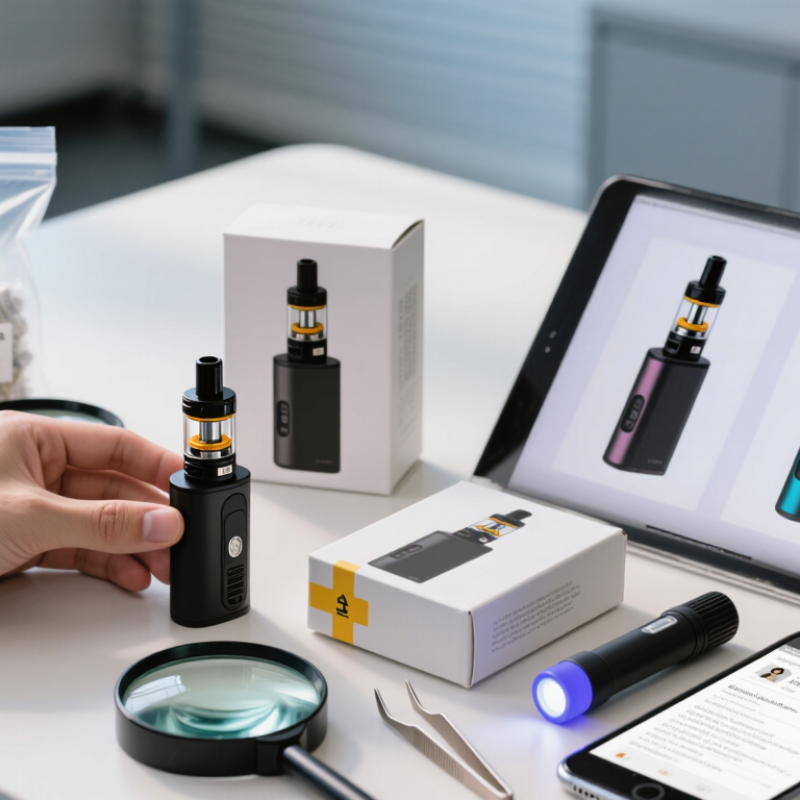
When assessing a Chinese vape supplier, verify the manufacturer behind the sales contact. Request its Chinese business name, unified social credit code, business license, and registered address. Check these details independently in China’s National Enterprise Credit Information Publicity System. Confirm the registration status and business scope, then compare the listed address with the factory address on audit records. A mismatch needs a clear explanation.
Check it yourself. The ISO Survey 2022 reported 426,716 ISO 9001 certificates in China across all sectors. That figure is not specific to vape manufacturing, and a certificate alone does not prove a supplier made the product. Ask for the certificate number, issuing body, scope, and expiry date. Verify them with the issuer or its accreditation body. The named company should match the entity on the business license.
Request a recent factory audit and review practical details: production-line photos, quality-control records, and batch traceability documents. Compare company names across invoices, certificates, and test reports. A scanned document can look convincing; treat it as a lead, not proof. If the seller cannot explain why the records name different entities, pause and investigate further. Verification can feel repetitive, but small inconsistencies matter.
Packaging is a useful first check, but neat printing alone proves little. The OECD and EUIPO estimated that counterfeit goods represented 2.5% of world trade in 2019, in their 2021 report. That figure covers many product types, not vapes specifically. It does show why traceable details matter. Look for intact seals, consistent spelling, sharp print, and a batch or lot code that appears consistently on the box and device.
Check the label for the product type, liquid volume, nicotine concentration, ingredient information, manufacturer details, and market-appropriate safety warnings. Requirements vary by destination, so compare the package with current guidance from the relevant local authority. Look for electrical ratings and charging instructions where applicable. A QR code can help, but codes can be copied; verify that it leads to a credible product or manufacturer record. Looks can mislead.
Small details matter. Compare fonts, spacing, and warning placement across packages from the same shipment. Confirm that the stated batch can be checked through a documented supplier or manufacturer channel. Do not rely on a logo or a safety mark just because it is printed clearly; check the issuing body’s public records when available. I would treat an unclear label as a reason to pause, even when the device looks convincing. That judgment is imperfect, but so is visual inspection alone.
A genuine vape product should have a serial number that matches its packaging and can be checked through the manufacturer’s official verification channel. Scan the QR code, but do not treat it as proof by itself: copied codes can lead to convincing pages. Check that the web address is authentic, the product description matches, and the result shows a clear status. OECD and the European Union Intellectual Property Office estimated counterfeit goods represented 3.3% of world trade in 2016; this was a broad estimate, not a vape-specific figure (Global Trade in Fakes, 2019).
Compare the serial number, batch code, and production details across the device, box, and authentication record. If a code has already been checked many times, or the records show a different product or date, pause and contact the manufacturer using contact details found independently. Keep a screenshot of the result and your purchase receipt. One limitation: verification databases may be temporarily unavailable, so an error message alone does not establish that a product is fake.
Tips: Scan in good light. Type the official web address yourself if a QR link looks unusual. Save the verification result, then ask the seller to confirm the batch record. Small mismatches matter. Check them.
| Verification Dimension | How to Check | Evidence to Look For | Warning Signs | Record to Keep |
|---|---|---|---|---|
| Serial number or authentication code | Enter the code through the product maker’s independently verified authentication channel. Do not rely only on a link or phone number printed on the package. | The check returns a result consistent with the product details, and the code has not been reported as invalid or previously checked an unusual number of times. | The code is missing, duplicated, rejected, or associated with different product details. A successful lookup alone does not prove authenticity. | Photograph the code and package, note the verification date, and save the result or reference number. |
| QR code and destination | Scan the code with a standard camera or QR reader. Inspect the destination address before opening it, and compare it with contact details obtained independently. | The address uses a secure connection and leads to a relevant product verification or support page. The page’s product details match the item. | The code redirects through an unrelated or misspelled domain, requests unnecessary personal information, or leads to a page that cannot identify the product. | Save a screenshot of the destination address and verification page. Avoid sharing passwords, payment details, or one-time codes. |
| Authentication record consistency | Compare the verification result with the product type, packaging details, and any batch or production information shown on the item. | Records are internally consistent, and any mismatch can be explained and confirmed through an independently obtained support channel. | Conflicting product descriptions, unexplained duplicate records, or verification results that cannot be independently confirmed. | Keep screenshots or written confirmation, together with the date and the channel used to verify the record. |
| Packaging and product details | Inspect printing, seals, product identifiers, warnings, and instructions. Compare them with official product information where available. | Labels are legible and consistent; required warnings and product information are present for the market where the item is sold. | Spelling errors, altered labels, broken seals, missing instructions, or details that differ from independently sourced product information. | Keep clear photos of all package panels, seals, and the product identifier before use. |
| Seller and supply documentation | Ask the seller for a dated receipt and appropriate supply or import documentation. Check that the seller’s contact details can be independently verified. | Documents identify the transaction and product clearly, and the seller can provide consistent information about the source. | No receipt, incomplete or inconsistent paperwork, pressure to pay through an untraceable method, or refusal to provide basic product information. | Save the receipt, listing, seller correspondence, and any supplied documentation. |
| Product condition and safety | Check for leakage, damage, unusual odor, abnormal heating, or signs of tampering. Follow the product instructions and local safety guidance. | The item is intact and shows no visible signs of damage or tampering. Packaging and product information are consistent. | Leakage, swelling, exposed wiring, damaged battery components, unusual heat, or other signs of damage. Do not use a damaged item. | Photograph any concern and retain the item and purchase evidence for a seller, regulator, or safety report. |
Important: A serial number, QR code, or authentication page can be copied or misused. Treat these checks as one part of verification, confirm results through independently sourced channels, and follow applicable local laws and product-safety requirements.
Compare the device in your hand with the manufacturer’s current official specifications, not just a seller’s product photo. Check the exact model number, dimensions, listed battery capacity, charging port, and pod or coil compatibility. Small details matter. A label that says one capacity while the official sheet lists another deserves a closer look. Compare the package too: spelling, print quality, and placement of required product information should match official reference images where available.
Use the manufacturer’s own website or contact channel to confirm details, especially when several versions look nearly identical. A QR code or scratch-off code can be useful, but it is not proof by itself; copied codes and convincing packaging exist. Check whether the serial or batch number is accepted through an official verification process. Keep the receipt and a clear photo of the packaging in case you need to ask the manufacturer or seller for clarification.
Specifications can change between production runs, and regional versions may differ, so compare like with like. I still find tiny model suffixes easy to overlook. If a key detail does not match, pause before using the product and request written confirmation from an official source. A polished box can still mislead.
When checking a vape product sourced from China, focus on evidence, not appearance alone. A clean box can still hide uncertainty. Look for blurry printing, spelling errors, uneven seals, or product details that do not match the device inside. Check whether the batch number is readable and whether the manufacturer provides a clear way to verify it. A QR code by itself proves little; copied codes can appear on multiple packages.
Pay attention to the seller’s answers. Vague claims about testing, manufacturing, or traceability deserve caution, especially when basic documents are missing or inconsistent. Ask for product specifications and relevant safety records, then confirm them through the manufacturer’s official contact channel. Compare the package, device markings, and instructions for matching model names and batch details. Country of origin alone is not a warning sign. The records matter more. Avoid products with damaged seals, unexplained changes, or no reliable verification path. It is easy to overvalue polished packaging; even careful checks cannot guarantee authenticity, so uncertainty should remain part of the decision.
Ask for its registered Chinese business name, unified social credit code, business license, and registered address. Compare these details with its factory records.
Search its details in China’s National Enterprise Credit Information Publicity System. Check its registration status and business scope. Small mismatches matter.
No. Verify the certificate number, issuer, scope, and expiry date. The company named on it should match the business license.
Review recent production-line photos, quality-control records, and batch traceability documents. Compare company names across audit records, invoices, and test reports.
Treat them as leads, not proof. Ask the supplier to explain any differences between the names or addresses on its records.
Check the exact model number, dimensions, stated battery capacity, charging port, and compatible parts. Compare the package with official reference images when available.
No. Codes and packaging can be copied. Check the serial or batch number through an official verification process, and keep the receipt.
Pause before using the product and request written confirmation from an official source. I still overlook tiny model suffixes sometimes; they deserve a second look.
How to identify counterfeit vape products starts with checking who made the item and whether the manufacturer provides clear, consistent business information. Examine the packaging for readable labels, complete product details, and relevant safety information. Missing, poorly printed, inconsistent, or unusually vague information may be a reason to pause and verify the product before use.
Where available, check serial numbers or QR codes through the manufacturer’s official verification channel, and compare the product’s appearance, specifications, and packaging with the manufacturer’s published information. Look closely for mismatched details, damaged seals, low-quality printing, or claims that cannot be confirmed. No single check guarantees authenticity, so consider the evidence as a whole and contact the manufacturer or seller when details do not match. If authenticity remains uncertain, avoid relying on the product and seek a verifiable source.

Leaf Vape