Vaping discussions often sound confident, yet confidence does not guarantee accuracy. Online posts may describe devices as harmless, completely safe, or equally dangerous as every tobacco product. These claims can influence real choices, especially when colorful devices sit beside phones, school bags, and kitchen counters. A careful introduction should separate measured evidence from personal stories.
What are the common vape myths people hear most often? Common examples include “vapor is only water,” “nicotine-free means risk-free,” and “vaping cannot affect bystanders.” These statements require closer examination. E-cigarette aerosol may contain nicotine, ultrafine particles, flavoring chemicals, and other substances. Products labeled nicotine-free may also deserve caution, because labeling accuracy can vary. Health agencies, including the World Health Organization and national public-health authorities, continue evaluating risks as evidence develops.
The comparison with smoking also needs precision. For adults who already smoke, some public-health guidance recognizes vaping may expose them to fewer harmful chemicals than combustible cigarettes. That does not make vaping harmless, and complete switching differs from using both products. Young people, pregnant individuals, and non-smokers should avoid nicotine exposure. Battery safety, product quality, and local age restrictions matter too.
Evidence changes.
A responsible guide should admit uncertainty instead of filling gaps with dramatic claims. I may not have every answer, and research continues. Still, reliable information can be checked against medical organizations, regulatory notices, and peer-reviewed studies. This article will examine popular vape myths carefully, explain what current evidence supports, and identify where caution remains necessary.
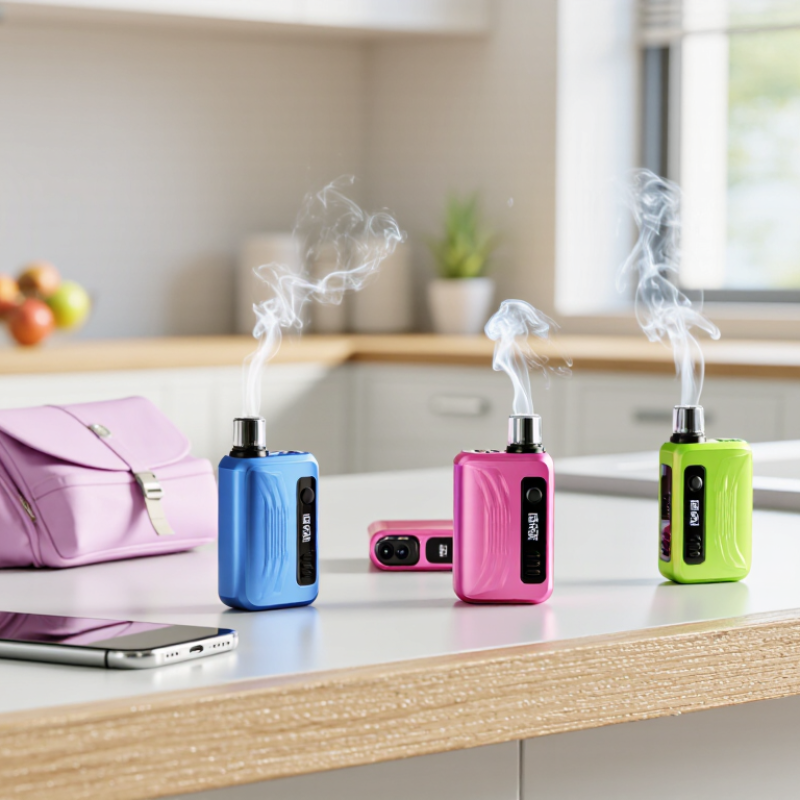
A vape myth is a claim that sounds certain but leaves out important evidence, context, or uncertainty. It may exaggerate a risk, dismiss one, or treat all devices and users as identical. That matters: the National Academies of Sciences, Engineering, and Medicine reported in 2018 that e-cigarette aerosol can contain harmful substances, while generally exposing users to fewer and lower levels of toxicants than cigarette smoke. “Fewer” does not mean harmless. The distinction is easy to lose in a headline.
Myths spread well because simple claims travel faster than careful explanations. A dramatic post, a friend’s story, or a cropped chart can feel more convincing than a report full of qualifications. The U.S. Surgeon General’s 2023 advisory on health misinformation notes that false health claims can spread through social networks and influence health decisions. Vape claims face the same problem: people may repeat a vivid anecdote as if it proves a general rule. I’ve caught myself doing that, too. It takes effort to pause.
Check who produced a claim, when it was published, and whether it links to evidence. Then look for what the source actually measured: aerosol, nicotine, health outcomes, or something else. These are not interchangeable. A report can be reliable and still have limits, and I sometimes wish every finding came with a clearer answer. It doesn’t.
What the data tells us: Reported current e-cigarette use among U.S. middle and high school students fell from 2.55 million in 2022 to 1.63 million in 2024. These figures describe use—not whether vaping is safe or harmless. Check what a claim measures, look for reliable evidence, and avoid treating popularity or changing use rates as proof of health effects.
Source: U.S. Centers for Disease Control and Prevention, National Youth Tobacco Survey (2022–2024). “Current use” means use on at least one day in the past 30 days.
A common claim says vape aerosol is only water vapor. It is not. The visible cloud can contain tiny particles, nicotine, flavoring chemicals, and substances formed during heating. What is present varies by device and liquid, so one test cannot describe every product. Public health agencies and independent researchers analyze these exposures, but gaps remain. That uncertainty is not proof of safety.
Another claim says vaping is harmless because it may expose users to fewer toxic substances than cigarette smoke. Lower exposure to some chemicals does not mean no risk. Nicotine can cause dependence, and aerosol may irritate the lungs. The long-term effects are still being studied. People comparing vaping with smoking should look for evidence about specific health outcomes, not just chemical counts. Small studies can raise questions, but they rarely settle them.
Claims about quitting also need careful reading. Some clinical studies suggest nicotine vaping can help certain adults stop smoking, while results depend on support, product use, and follow-up. It is not a universal solution. A headline may leave out those details. Check who funded a study, how many people took part, and whether researchers tracked participants over time. I sometimes find the evidence messier than a neat myth-versus-fact chart suggests. That is worth admitting.
Comparisons depend on what someone is comparing. For adults who smoke, completely switching to vaping may reduce exposure to many harmful chemicals produced by burning tobacco. It does not make vaping safe. Vape aerosol can contain nicotine, fine particles, and other substances that may irritate or harm the lungs. Long-term effects are still being studied, so confident claims that vaping is harmless go too far.
Nonuse is the lowest-risk choice for people who do not use tobacco or nicotine. Young people and people who are pregnant should avoid vaping. For someone who smokes, using both cigarettes and vapes may preserve much of the harm from smoking; cutting down is not the same as switching completely. A kitchen comparison helps: avoiding the smoke does not make the aerosol clean air. It is tempting to make the risk ranking sound simple, but individual health and patterns of use matter. That deserves caution.
Tips: Check whether a claim compares vaping with smoking or with nonuse. Ask what evidence supports it, and be wary of words like “safe” or “risk-free.” If you smoke and want to quit, discuss proven support options with a qualified health professional.
How to Identify Common Vape Myths?
Misleading vape information often sounds certain: “harmless,” “risk-free,” or “proven safe.” Treat absolute claims cautiously. Health effects can vary, and evidence may change as researchers study different products and patterns of use. A clean-looking device or sweet scent does not prove that its aerosol is harmless. That distinction matters.
Look closely at who created a claim and what evidence supports it. Marketing may use phrases like “natural” or “light” without explaining what they mean. Ask whether the message links to independent research, names its limitations, and distinguishes measured results from promises. A dramatic testimonial is not the same as a well-designed study. Neither is a cropped chart without its source. Small details count.
Reliable health information usually explains uncertainty instead of hiding it. Compare claims with guidance from established public-health organizations and peer-reviewed research, and check when the information was published. If a page sells a product while making health promises, that conflict deserves attention. I have found that confident wording can feel more convincing than careful evidence; it is worth pausing before sharing it. Some questions remain unsettled. That is not proof of safety.
| Common Claim | What the Evidence Shows | How to Spot Misleading Information | Practical Takeaway |
|---|---|---|---|
| “Vape aerosol is just harmless water vapor.” | Vape aerosol is not simply water vapor. Depending on the product and how it is used, it can contain nicotine, fine particles, flavoring chemicals, and other potentially harmful substances. | Be cautious when a claim describes aerosol as “only water” or implies that visible vapor is the only exposure to consider. | Do not assume that an aerosol is harmless because it looks like mist. |
| “Vaping is completely safe.” | Vaping can expose users to nicotine and other substances. The long-term health effects are still being studied, so “completely safe” is not an evidence-based description. | Look for absolute promises such as “risk-free,” especially when no credible evidence or limitations are provided. | “Not fully understood” does not mean “risk-free.” |
| “Nicotine-free means there is no nicotine-related concern.” | Some products labeled nicotine-free have been found to contain nicotine. Product contents and labeling can vary, and a label alone may not verify what is in a product. | Check whether a claim is supported by independent testing and clear information about the product and test method. | Treat product labels as claims, not independent proof. |
| “Vaping cannot lead to nicotine addiction.” | Many vaping products contain nicotine, which is addictive. Nicotine dependence can develop with repeated use. | Be skeptical of messaging that minimizes nicotine or presents frequent use as consequence-free. | Check whether the product contains nicotine and consider the risk of dependence. |
| “Vaping is harmless for young people.” | Nicotine can affect the developing brain, and health authorities advise young people not to use nicotine products. Flavors or discreet designs do not remove these concerns. | Notice marketing that emphasizes flavors, lifestyle, or “fun” while omitting age-related health information. | Youth and people who do not use tobacco should avoid vaping products. |
| “Secondhand vape aerosol is only a cloud and cannot affect others.” | People nearby can breathe in aerosol released into the air. Exposure may include nicotine and other substances, although levels and composition vary. | Question claims that equate “less smoke” with “no exposure” or disregard people sharing indoor spaces. | Avoid vaping around others, particularly in enclosed spaces. |
| “Vaping is proven to be a safe way for everyone to quit smoking.” | Evidence on vaping as a smoking-cessation aid is still developing, and regulatory approval and guidance differ by country. A product should not be described as a guaranteed or universally appropriate treatment. | Look for claims of guaranteed success, universal suitability, or medical approval without a verifiable regulator or clinical source. | People seeking to quit smoking can consult a qualified health professional about evidence-based support. |
| “If vaping exposes users to fewer harmful chemicals than smoking, it is harmless.” | Some public health assessments indicate that vaping may expose users to fewer harmful chemicals than combustible cigarette smoke, but fewer exposures do not mean no risk. The comparison also does not make vaping a safe choice for non-smokers. | Check whether a comparison is being turned into a blanket safety claim or used without stating what is being compared. | A relative-risk comparison is not the same as proof of safety. |
| “A personal story proves that a vape product is safe or effective.” | Individual experiences cannot establish typical results, identify all risks, or replace controlled research. Testimonials may also be selected or sponsored. | Ask whether evidence comes from well-designed research and whether financial or promotional interests are disclosed. | Use reliable health sources and research—not testimonials alone—to evaluate claims. |
A confident post is not the same as good evidence. Check who produced the claim, when it was published, and whether it links to the original research. Government health agencies and peer-reviewed reviews often explain how evidence was gathered and where uncertainty remains. For example, the US National Academies’ 2018 report reviewed more than 800 studies on e-cigarettes. It found that exposure depends on the device, liquid, and how the product is used. That detail matters: a single dramatic claim may not fit every situation. Look for the actual report, not a cropped chart.
Numbers need context. The US Centers for Disease Control and Prevention reported that 5.9% of high school students reported current e-cigarette use in its 2024 National Youth Tobacco Survey. That figure describes a specific age group, place, and survey period; it is not a global estimate or a measure of every person’s exposure. Compare the survey’s definition of “current use” with the claim being shared. Check the sample, date, and funding disclosures, too. I still find percentages persuasive at first glance. That instinct needs checking. If two reliable sources appear to disagree, examine their methods before deciding one must be wrong.
It often ignores evidence, context, or uncertainty. A confident headline can hide important details.
No. It can contain tiny particles, nicotine, flavoring chemicals, and substances formed during heating. The exact mix varies.
No. Lower levels of some toxicants do not mean zero risk. Nicotine can cause dependence, and aerosol may irritate the lungs.
No. Researchers are still studying them. Uncertainty is not proof of safety.
Some studies suggest it may help certain adults. Results depend on support, product use, and follow-up, so it is not a universal solution.
Check who produced it, when it appeared, and whether it links to evidence. Look for what researchers measured and what limits they reported.
Not by itself. One person’s story may be vivid, but it cannot establish a general health rule.
Treat absolute or vague claims cautiously. A sweet scent, clean-looking device, or reassuring label does not prove safety.
Funding can reveal a possible conflict of interest. Also check the study’s size and whether researchers followed participants over time.
It explains uncertainty, cites evidence, and names limitations. Some answers remain unsettled.
This article explains how vape myths develop and why they can spread quickly: complex health topics are often reduced to simple claims, repeated without context, or shaped by persuasive marketing. It asks, “What are the common vape myths,” and encourages readers to treat familiar statements as questions to investigate rather than facts to accept. Claims should be checked against the quality of the evidence, the population studied, and whether important limits or uncertainties are acknowledged.
The article also puts vaping risks in context by distinguishing them from the risks of smoking and from using neither. Comparing these situations does not mean vaping is risk-free. Readers can spot misleading information by watching for exaggerated promises, missing caveats, and unsupported statistics. To verify a claim, consult reliable health sources, check when information was published, and compare multiple credible references before drawing a conclusion.

Leaf Vape