Choosing between disposable and rechargeable vapes can be challenging. Many users wonder, "What is the difference between disposable and rechargeable vapes?" This question is crucial for anyone looking to switch or start vaping. Disposable vapes are convenient. They require no maintenance. You simply use them until they are empty and then toss them away. On the other hand, rechargeable vapes offer a sustainable option. They often provide better value over time.
When considering these options, think about your lifestyle. Disposable vapes are easy for on-the-go users. They are lightweight and portable. However, they generate more waste. Rechargeable vapes may require an initial investment, but they are more environmentally friendly. Many users find they can save money in the long run.
Reflecting on personal preferences is essential. How often do you vape? Are you concerned about environmental impact? The answers to these questions will guide your choice. Users should engage in this reflective process to make an informed decision. Each type of vape has its pros and cons. Understanding these will help you choose wisely.
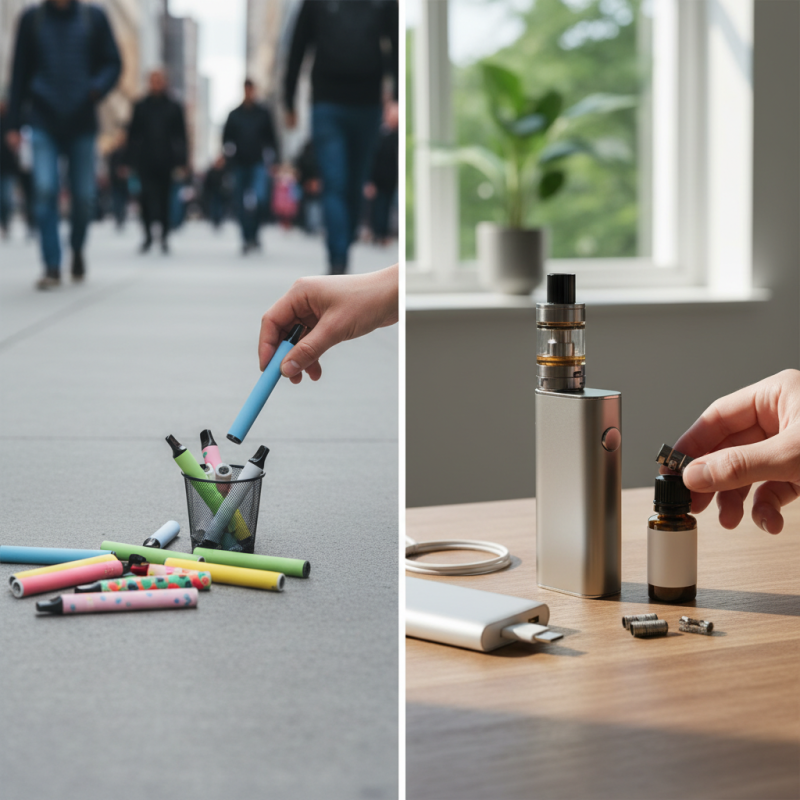
Understanding the Basics of Disposable and Rechargeable Vapes
Understanding the differences between disposable and rechargeable vapes is key for any user. Disposable vapes are designed for single use. They come pre-filled and are ready to use right out of the box. According to industry reports, nearly 45% of vape users prefer disposables due to their convenience. They are simple and hassle-free, offering a no-fuss experience. However, they often lack the variety in flavor profiles found in rechargeable devices.
Rechargeable vapes, on the other hand, appeal to those who value customization and sustainability. These devices allow users to refill e-liquid and change coils, which can lead to a more personalized experience. Data shows that 75% of frequent users prefer rechargeable vapes because they are more economical in the long run. Yet, it requires a commitment to maintain and manage the device. For some, this added responsibility may be a drawback.
Choosing between these two options can be challenging. Disposable vapes may seem easier but are less environmentally friendly. Rechargeables offer customization but can be confusing for newcomers. Both types have their merits and faults, making personal preferences vital in this decision. Reflecting on your vaping habits will guide you in making the right choice.
2026 How to Choose Between Disposable and Rechargeable Vapes?
| Feature |
Disposable Vapes |
Rechargeable Vapes |
| Initial Cost |
Low |
High |
| Maintenance |
None |
Regular charging needed |
| Environmental Impact |
Higher due to disposability |
Lower if reused |
| Flavor Variety |
Good |
Excellent |
| User Experience |
Simple and straightforward |
More features available |
| Battery Life |
Limited to pre-filled amount |
Recharges for extensive use |
Comparing Cost-Effectiveness of Disposable vs. Rechargeable Vapes
When comparing the cost-effectiveness of disposable and rechargeable vapes, it’s essential to consider several factors. According to a recent report by the vaping industry, disposable vapes typically range from $5 to $15 per unit. In contrast, rechargeable devices require an initial investment usually between $30 and $100. This price difference can be significant for daily users.
Users often overlook the ongoing costs associated with each type. Disposable vapes can be convenient, but they can lead to more frequent purchases. Data suggests that a seasoned user might consume up to five disposables a week, amounting to $20 to $75 monthly. Meanwhile, a rechargeable vape can last over a month with a single charge and a set of e-liquids costing around $15 to $30. Over time, this makes rechargeable vapes more economical for heavy users.
However, there are nuances to consider. Some smokers prefer the taste and variety offered by disposables, despite the higher cost over time. Additionally, users need to reflect on the environmental impact of disposable vapes, which contribute to increased waste. Rechargeable vapes, while initially more expensive, often provide a more sustainable and cost-effective solution. Understanding personal preferences and usage habits is key to making an informed decision.
Evaluating Environmental Impact: Disposable vs. Rechargeable Options
When considering the environmental impact of vaping options, it’s essential to weigh the benefits and drawbacks of disposable and rechargeable vapes. Disposable vapes are generally made from plastic and other non-biodegradable materials. Once used, they end up in landfills, contributing to pollution. This single-use nature encourages wastefulness, and many users may not think about their ecological footprint.
Rechargeable vapes, however, can be more eco-friendly when used responsibly. They are designed for long-term use, reducing the amount of waste generated over time. While the batteries in these devices do pose an environmental threat if not disposed of correctly, proper recycling can mitigate this issue. Interestingly, many vapers may overlook the proper disposal methods for both devices, highlighting a gap in awareness and responsibility.
Choosing between these options demands careful consideration. It is crucial to evaluate not just the immediate convenience but also the long-term impact. Personal choices shape environmental outcomes. Reflecting on this can lead to more responsible vaping habits. Educating oneself about disposal and ecological responsibility is vital for making informed decisions.
Environmental Impact of Disposable vs. Rechargeable Vapes
This chart compares the environmental impact of disposable and rechargeable vapes across three key metrics: CO2 emissions, plastic waste, and average lifespan. As depicted, disposable vapes generate significantly more CO2 and plastic waste while having a much shorter lifespan compared to their rechargeable counterparts.
Assessing Flavor Variety and Performance in Vaping Devices
When choosing between disposable and rechargeable vapes, flavor variety and performance are crucial factors. Disposables often offer a wide range of flavors, catering to different preferences. Users can experiment without committing to a single flavor. Rechargeable vapes may have fewer flavor options, but they tend to provide a more consistent taste over time.
A key element in performance is vapor production. Disposables typically deliver a quick, satisfying experience, which is great for on-the-go users. Rechargeable devices can be adjusted for airflow, enhancing control over vapor density. However, finding the perfect balance may take time and experimentation.
Tips: Start with a few disposable options to identify your preferred flavors. Then, consider investing in a rechargeable vape for better customization. Keep your device clean; e-liquid residues can affect flavor negatively. Stay open to trying new flavors, as your palate might change.
User Experience: Convenience and Maintenance of Both Vape Types
When selecting between disposable and rechargeable vapes, user experience plays a vital role. Disposable vapes offer remarkable convenience. They arrive pre-filled and ready to use, eliminating the need for refilling. Users can choose different flavors without commitment. Once finished, they can simply be thrown away. However, this convenience comes at a cost: empty devices contribute to waste.
Rechargeable vapes, while initially requiring more setup, present a different experience. They need regular maintenance, such as refilling e-liquid and replacing coils. This might deter some users seeking simplicity. However, they are often more sustainable. Users can enjoy various flavors without increasing waste. The downside is that battery life can vary, leading to moments of inconvenience if the device dies unexpectedly.
Ultimately, both types have their pros and cons. The decision hinges on lifestyle preferences. Casual users may lean towards disposables for ease. Those who value sustainability might prefer rechargeable options. Reflecting on individual habits can help in making the right choice.
FAQS
: Disposable vapes are designed for single use and come pre-filled, ready to use.
Users often prefer disposable vapes for their convenience and hassle-free experience.
Rechargeable vapes allow users to refill e-liquid and change coils for a personalized experience.
Disposable vapes range from $5 to $15, while rechargeable devices cost between $30 and $100 initially.
No, disposable vapes contribute to increased waste and are less environmentally friendly compared to rechargeable vapes.
Rechargeable vapes require regular maintenance, which can be overwhelming for those seeking simplicity.
Battery life can vary for rechargeable vapes, leading to inconveniences if the device dies unexpectedly.
Yes, seasoned users often find rechargeable vapes more economical over time due to lower ongoing costs.
Users should reflect on their vaping habits, preferences, and the environmental impact of their choice.
Disposable vapes often lack the flavor variety found in rechargeable devices, which might influence the choice.
Conclusion
Choosing between disposable and rechargeable vapes involves understanding several key factors. First, it’s essential to grasp the basics of both types: disposable vapes are typically ready to use straight out of the box, while rechargeable vapes require initial setup and maintenance. Cost-effectiveness is another significant consideration; disposable vapes may have lower upfront costs but can add up over time, whereas rechargeable vapes often offer more value for regular users.
Environmental impact is also crucial in the decision-making process. Disposable vapes contribute to more waste, while rechargeable options can be more sustainable in the long run. Additionally, flavor variety and performance may vary between the two types, with rechargeable vapes often offering more customizable experiences. Ultimately, the question "What is the difference between disposable and rechargeable vapes?" encompasses factors like user experience, convenience, and maintenance, guiding users to make informed choices based on their lifestyle and preferences.

 Leaf Vape